
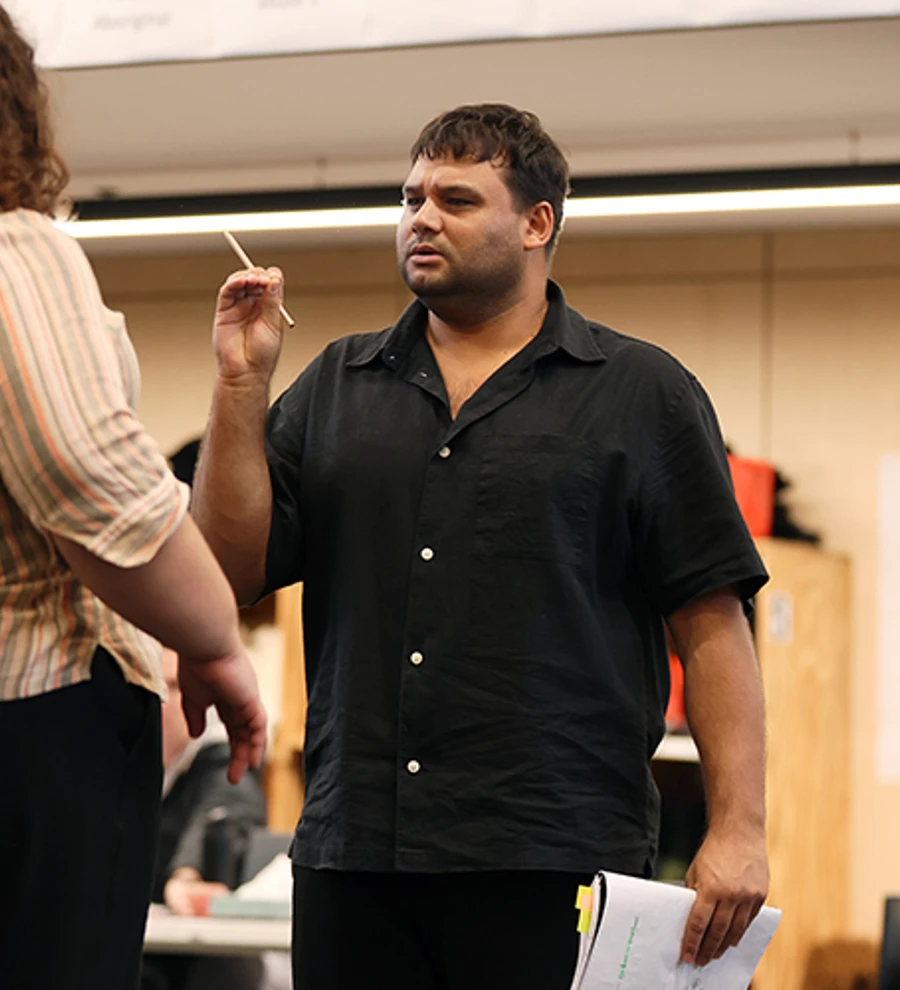
Directing Stolen has been and continues to be a process filled with a multitude of emotions. I find it difficult to find the words to express the depth of my gratitude to Jane for trusting me with bringing her words to life; the despair when reading the most recent statistics of our children in out-of-home care, the overwhelming sadness I feel as I write this on Sorry Day, I’m reminded of the flicker of hope ignited by “the apology”, the grief I felt at the age of 25 when my Dad told me he and his siblings had been taken from their father in the early 1970s. I feel a deep responsibility to honour the truth, pain, tenderness, humour, and injustice within this timeless script; how thankful I am to the artists I’ve made this production with, for their collaboration and care for the work and each other, the desperation in hoping this production might change minds and open hearts. And I could share with you anecdotes about how the play has circled my life, how, when I used the monologue 'A Can of Peas' to get into acting school, when I toured a play across the country for four years and I would see the names of the original cast and creatives scrawled across theatre walls and dressing rooms, I feel that same invigoration today in walking in the footsteps of some of my biggest inspirations as an artist.
Though it may sound cliché, the process has been bittersweet. The bitterness lies in how resonant the lives of these characters feel today, how there isn’t a single First Nations person in this country who hasn’t been affected by the government’s policies of forced removal. Amidst the bitter, there’s a sweetness found in the process too and this production is a testament to the work of the cast and creative team who filled our rehearsal room with endless generosity, possibility, love and dedication in bringing these vital stories to light and demanding they be heard.
In the late 1990s and early 2000s, theatremakers like Jane, Wesley Enoch, Deborah Mailman, Tammy Anderson, Richard Frankland, Rachael Maza and so many others, were playing with form and style while pushing the boundaries of what black storytelling was and could be. They did this while upholding the stories of their communities and what it was to be black in this country at the time. These visionaries drew inspiration and told stories from both the present and the past which has shaped the landscape of First Nations theatre in various ways over the past twenty years. Premiering in 1998 to sold-out seasons across Australia and the world, the play has been revived in new productions for decades, and from the first standing ovation at its Melbourne premiere to today, it has been seen by over 150,000 people across the globe.
The legacy of Stolen extends beyond the stage, resonating as powerfully today as it did when it premiered 26 years ago. This poignant script intricately weaves together the narratives of five characters – Ruby, Jimmy, Shirley, Sandy, and Anne – whose lives are forcibly disrupted as children, stolen from their families. The play unfolds through a nonlinear narrative, transitioning between past and present, sketching the memories and experiences of these children placed in repressive children’s homes and trained for domestic service. In many scenes they interact as though they’re in the home together, and throughout we see them navigate their lives as adults, as they find their way in a world where they have been told to forget their families, their communities and culture.
When thinking of this production early on and what the experience for the audience witnessing this story now might be, I considered the many who probably studied it in high school, are studying it now or have expectations of what a play about the Stolen Generations may be. The creatives and I held onto the idea that potentially, through design or in the making of the production we could somehow – like the original brief in writing the play – amplify and tell the multitude of stories, that we could honour that original production in 1998 and the people who made it, the ones who laid the path for us to be able to tell this story today. The setting notes from the original text continue to resonate with us, in particular, “Five old iron institutional beds alternate across the stage. The beds are the base of the five main characters, representing their homes at various stages of their lives. At times they become, a children’s home; a prison cell, a mental institution, and a girl’s bedroom.”, and, “The only other props are a drab green metal filing cabinet, on the far of the stage right”. It felt significant in the making of this production that the world – an almost nightmarish playground of the characters’ memories and trauma – should be created through the imagination and memories of these characters, transposing across time and locations, both as children and adults. They are now in control of telling their story.
Jane once said “For audiences, I hope it brings understanding that we are all part of this story, it is part of our history and our present. For the Aboriginal community members in the audience, it is my profound hope that we do your stories justice.” In dedication to all of the children of the Stolen Generations and the children who continue to be taken from their families and communities, we offer this production in the hope we have done your lives justice.