
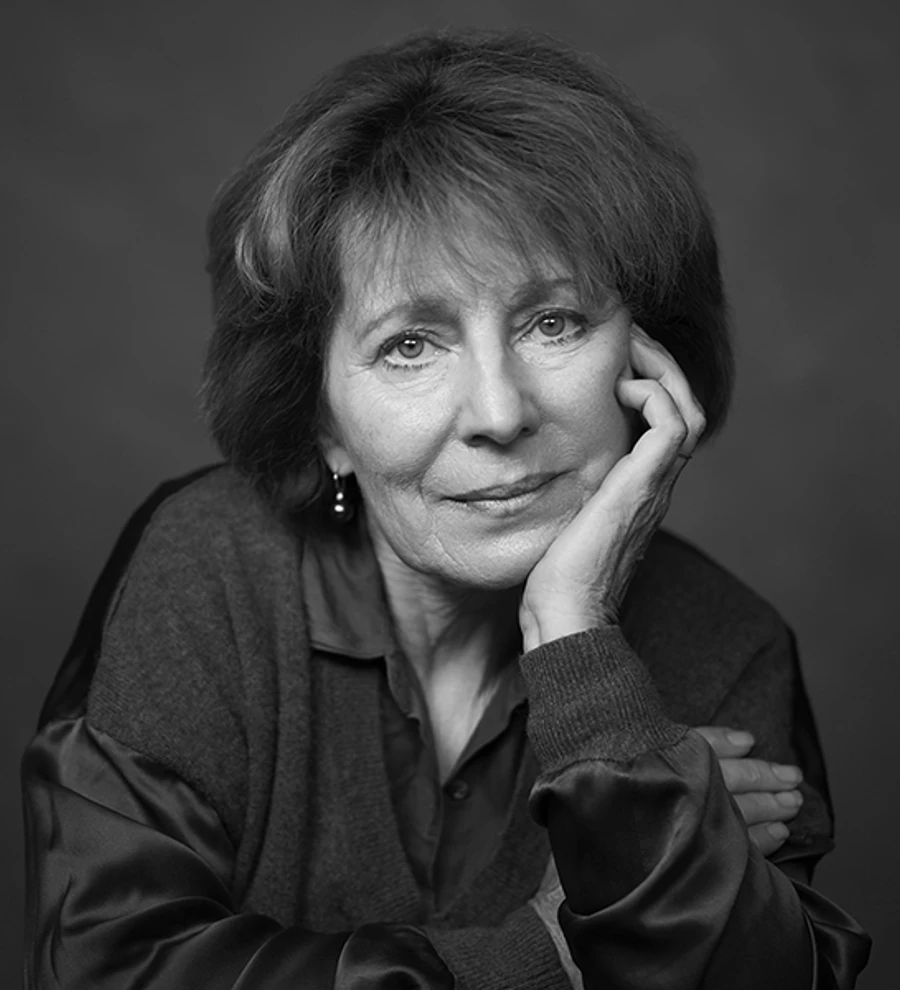
Adapter Verity Laughton writes about transforming Pip Williams' novel into an award-winning stage play.
Pip Williams’ The Dictionary of Lost Words has a long arc from its heroine Esme’s 1880s childhood in Oxford, England, to her lexicographer daughter’s opening address at the 1989 Convention of the Australasian Lexicography Society in Adelaide, Australia.
Between those events Esme grows up, word-obsessed, with a bright intellect for which there is no outlet. She is radicalised through the suffrage movement but even her activist forays are polite, contained, and wary. She maintains an aura of innocence and a commitment to moral principles to the end.
Esme’s actions are often secret, even to herself; she lacks power but makes that work for her; and, whilst her society is enmeshed in great events – Victorian England on the cusp of convulsive change, the striving for the female right to vote, the 1914-1918 First World War at ‘home’ and in the trenches – the great events of Esme’s own life are often internal. This is part of the tender and thoughtful intelligence of the narrative voice in the novel. She is a wonderful – and highly original – creation.
The Dictionary of Lost Words – the novel – has attracted a readership of over half a million people world-wide. It’s been a phenomenon. Part of this response has surely been to the originality of its premise – the way it reflects the making and power of language through its protagonist’s interrogation of what words mean to her, and the dispossessed ‘others’ for whom she feels such empathy.
The adaptation of a contemporary novel is different from an adaptation of a classic work where the point of that is to reinvent both text and story. With a contemporary novel – the main game is that it’s not your story – you are there to serve someone else’s story, and just as importantly, someone else’s audience. And when it’s a beloved new novel – a collective discovery – that fact is a high priority.
I saw my task as an interweave of the plot of the stealing of the words/slips and the ripple of events that follow; of the character narrative of Esme, whose attempt to save a remnant of her mother leads to her vocation, but whose mixture of innocence, stubbornness and good nature makes her vulnerable in a damagingly patriarchal world. And the exploration of the theme, to paraphrase Pip Williams’ description, ‘If words mean different things to men and women, what has been lost in the defining of them?’
It has been a joy to work on this lovely book. In our strident, cut-throat 21st century world an affirmation of the bonds of affection, of a clear and idiosyncratically endearing sense of deep moral purpose, of found dignity and quiet courage in context of the arbitrary blows of fate – and charm, don’t forget charm in its best sense! – feels timely, a guide for a way through damage and complexity that readers have responded to, and I hope audiences can now access.